
sniff
pittsburgh
Bicycle Powered
Air Quality Monitoring
⚠️ Project Archived
Hello! Sniff Pittsburgh has been archived since December 2025. This website serves as a showcase for what we accomplished during our Fall 2025 capstone project class. Unfortunately, parts of this site may be broken. Thanks for visiting!
Welcome! Sniff Pittsburgh is our senior Fall 2025 Electrical and Computer Engineering capstone project at CMU. The goal of Sniff Pittsburgh is to monitor air quality across Pittsburgh using POGOH bicycle-mounted sensors. By combining mobility with advanced sensing technology, we're creating a detailed, real-time map of air quality throughout the city that addresses gaps in existing monitoring infrastructure.
Our sensors measure particulate matter (PM1.0, PM2.5, and PM10), nitrogen oxides (NOx Index), volatile organic compounds (VOC Index), and carbon dioxide (CO2) as cyclists move through different neighborhoods, providing unprecedented granularity in air quality data.
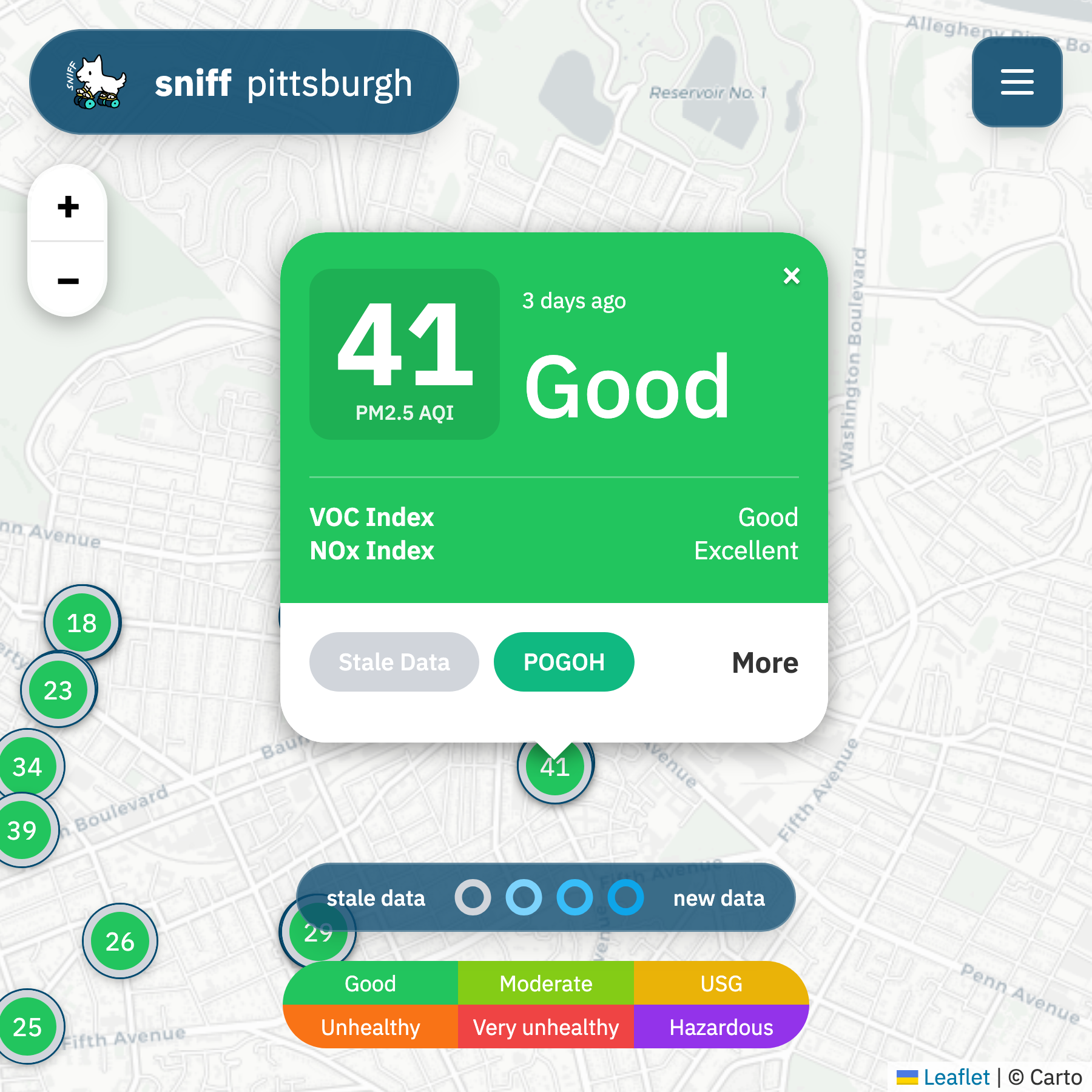
Custom-built air quality sensors are mounted on bicycles, collecting data as riders navigate through Pittsburgh's streets and neighborhoods.
Data is transmitted in real-time via LoRaWAN network, ensuring up-to-date information about air quality conditions across the city.
All collected data is visualized on our interactive map, allowing residents to see air quality patterns and trends in their neighborhoods.
The Sniff Visor is our custom air quality sensing suite designed for mobile deployment on POGOH bicycles. It integrates multiple sensors to measure key air quality parameters, including particulate matter (PM1.0, PM2.5, PM10), nitrogen oxides (NOx Index), volatile organic compounds (VOC Index), and carbon dioxide (CO2). To mitigate wind effects, we implemented a novel air sampling design, capturing air into a custom-built cavity with mechanical dams before it reaches the sensors.
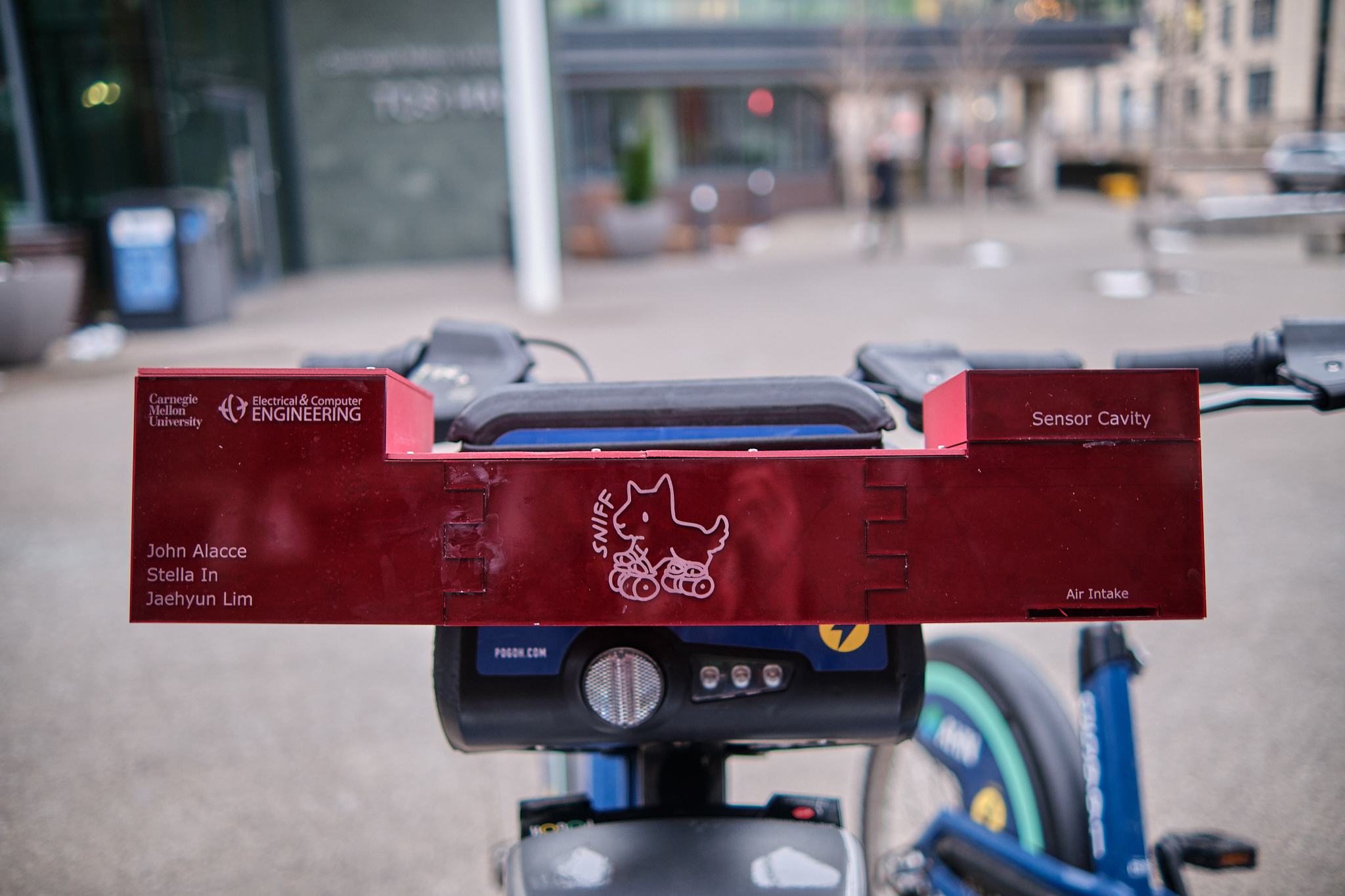
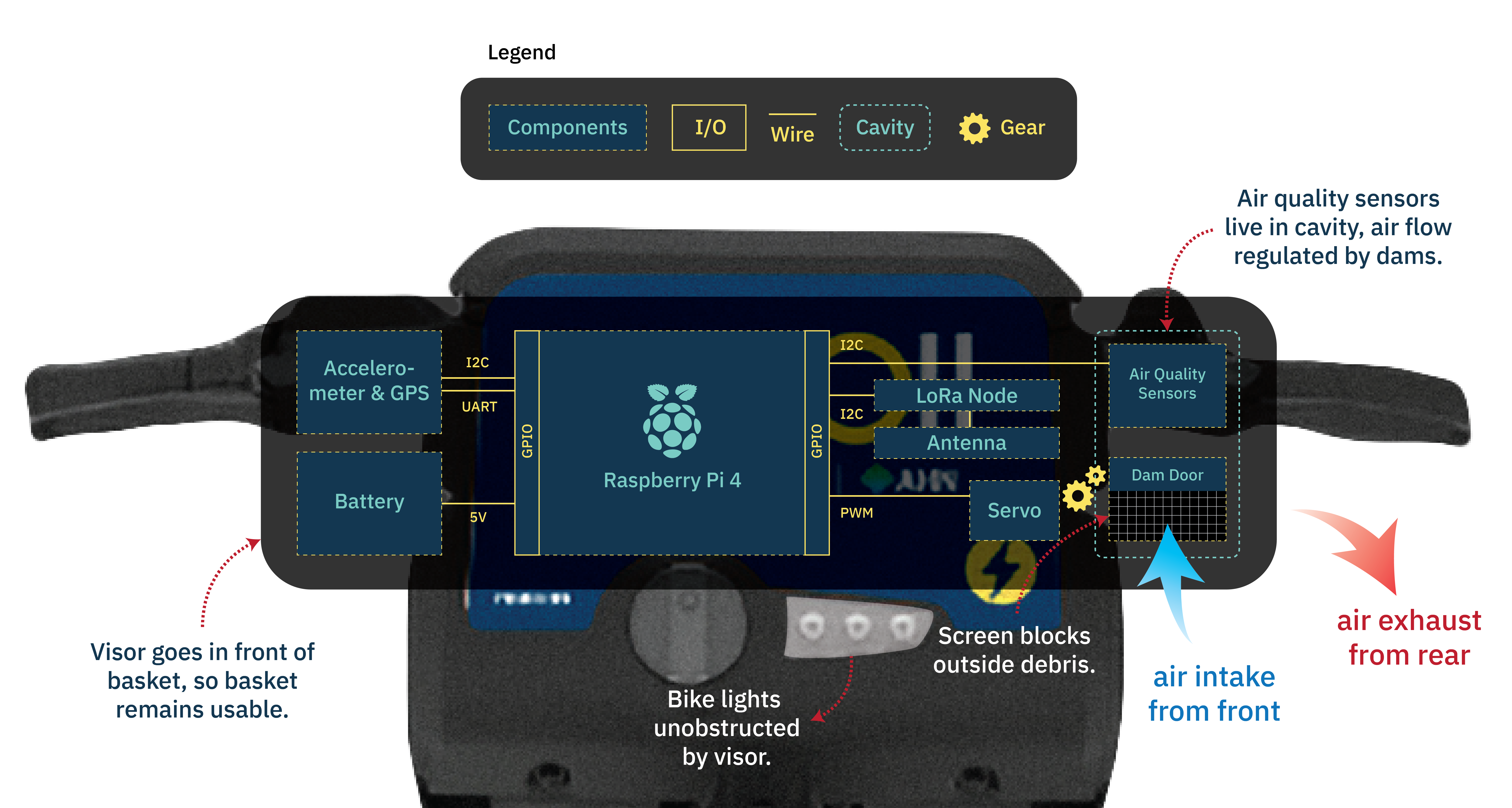
Figure 1: Diagram of the Sniff Visor showcasing the component layout and shape in front of the POGOH bike basket.
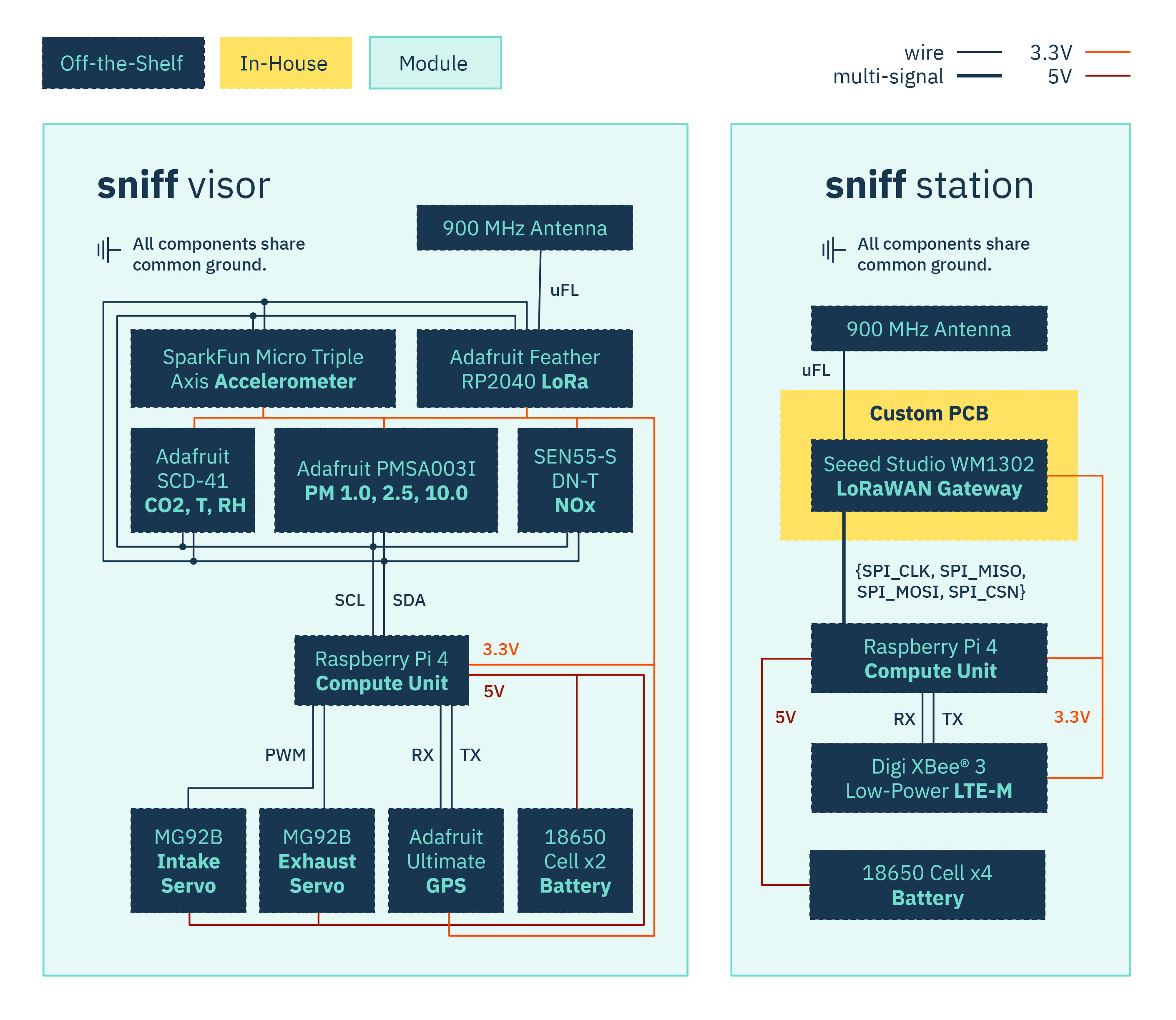
Figure 2: Detailed system diagram of Sniff Visor illustrating internal components and connections. The Sniff Station is also shown here. Its purpose is to receive data from the Visor via LoRaWAN and forward it to the cloud server via WiFi.
Pittsburgh has a complex history with air quality. While conditions have improved significantly over the decades, localized pollution hotspots still exist, often in underserved communities.
Traditional air quality monitoring relies on a small number of fixed stations, which can miss important variations across neighborhoods. Our mobile approach provides the resolution needed to understand these local differences.
We hope this data empowers residents, policymakers, and researchers to make informed decisions about health, transportation, and environmental policy.

From left to right: Jaehyun Lim, John Alacce, Stella In
Want to help expand our coverage? Interested in the data? Have questions about the project? We'd love to hear from you! Contact any of our team members below.